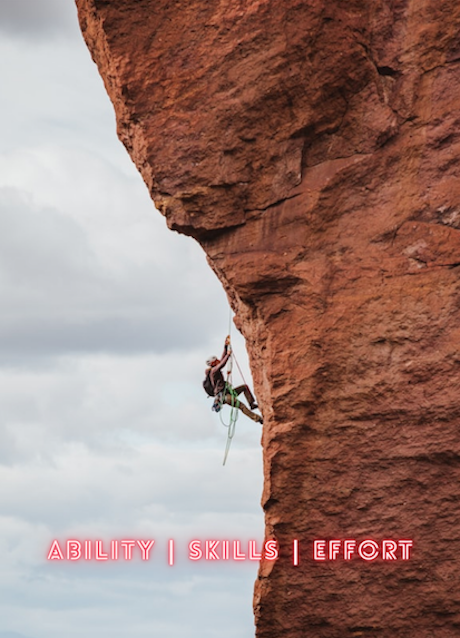
• The Power of Flow State and How To Access It

    In neuroscience, the concept of ‘flow’ is currently a popular topic in the field. Flow describes a specific mental state that allows us to focus intensely on a single task or subject matter.

  • The Three Things you Need to Make Peak Performance

    James Arthur Lovell, Jr., one of the first American astronauts to fly and orbit the moon once said, “Be thankful for problems,​​ if they were less difficult, someone with less ability ...

  • Four Tings That Can Make Your Life More Meaningful

    When we spend our lives merely surviving, life can start to seem a little empty and pointless. Nevertheless, this is exactly how many of us live:

  • How To Stay Calm In the Storm ...

    The storm is all around us. The Coronavirus COVID-19 disease which was declared a global pandemic by WHO has an alarming fatality rate and it instills fear and panic in our daily lives.

  • A Prayer For Wisdom

    This prayer is quoted from the Bible in the book of Wisdom 8:17-21; and Wisdom 9:1-18 NLT (New Living Translation: Catholic Edition).

Saturday, December 31, 2022

How Wise Is The Idea That Less Is More!

Do you agree that in the photos above - the half-topless is more beautiful?

Is being half-topless add something to the woman's beautiful appearance or not?

Less is more is a phrase that has been popularized in recent years as a way to describe the idea that sometimes, having fewer possessions or simplifying our lives can lead to a better overall quality of life. The phrase is often attributed to the minimalist movement, which advocates for living with fewer possessions and a more simplistic approach to life.


On the contrary, Dolly Rebecca Parton, an award-winning American singer-songwriter for country music who in her career has composed over 3,000 songs, has a different view on less is more. On one occasion she was quoted as saying: ‘Some people say that less is more. But I think more is more.’ These words were spoken by an artist who has sold more than 100 million records worldwide. But an in-depth look at her career, we noticed that in the 1990s the sales of her albums flopped and became a total commercial failure. We do not know for sure what was the reason for that but this blog post is going to argue in favor of the idea that less is truly more.


Olivia's Story on Less is More


The following story affirms the simple concept that less is more. In the bustling city of London, there was a young woman named Olivia. Olivia was a successful businesswoman, and she had worked hard to build a successful career and accumulate a large number of material possessions.


Despite her success, Olivia found that she was often stressed and unhappy. She worked long hours and was constantly trying to keep up with the demands of her job and her busy lifestyle. She reached a point where she became a victim of recreational drugs.


One day, Olivia decided to take a break and go on a solo retreat in the countryside of ​​St Albans, Hertfordshire in the vicinity of London. While there, she discovered the joys of living a simple life and began to understand the value of slowing down and focusing on what truly mattered.


Upon her return to the hustle and bustle of Oxford Street in London, Olivia decided to downsize her possessions and simplify her life for the better. She sold her large city home and moved to a small cottage she bought in the countryside of ​​St Albans, Hertfordshire, where she was able to focus on her passions and find a sense of peace and contentment. Still, happily ever after, she went on to live one of the fullest and most satisfying life that existed only in her imagination.


Olivia came to realize that sometimes, less really is more and that a simple life can lead to greater happiness and fulfillment.


The Background Story of Less is More:


(Bust of Epicurus, from the Pergamon Museum, Berlin, Germany)


You’ve to understand that the concept of "less is more" is not a new one. In fact, the idea has been around for centuries and can be traced back to the ancient Greeks. One notable example of this concept can be seen in the works of the philosopher Epicurus, who lived in the 4th century BC.


Epicurus believed that the key to living a happy, fulfilling life was to focus on what truly mattered and to avoid unnecessary distractions. He argued that material possessions, wealth, and power were not the keys to happiness, and that true happiness could only be found by living a simple, virtuous life.


This idea is exemplified in one of Epicurus' famous quotes: "Do not spoil what you have by desiring what you have not; remember that what you now have was once among the things you only hoped for." This quote emphasizes the importance of being content with what we have and not constantly striving for more.


Less is More in the Context of Modern Architecture:


Photo by Pia Fuhst on Unsplash
(Barcelona Pavilion, Barcelona, Spain)


Another notable example of the concept of "less is more" can be seen in the work of the architect Ludwig Mies van der Rohe. Mies was a pioneer of the modernist movement in architecture, and his work is characterized by a focus on simplicity and minimalism.


One of architect Mies' most famous works is the Barcelona Pavilion, a building that was designed for the 1929 International Exposition in Barcelona. The Pavilion is a prime example of Mies' philosophy of "less is more," as it is characterized by a simple, uncluttered design and an emphasis on clean lines and geometric shapes.


The Pavilion has become an iconic example of modernist architecture, and its simple, minimalist design has had a lasting impact on the field. Mies' work serves as a testament to the idea that sometimes, less really is more.


The Wisdom of Less is more in the Bible:


Bringing the Bible into the discussion, we have one biblical example of the concept of "less is more" which can be found in the story of King Solomon. Solomon was known for his great wisdom and wealth and was said to be the wealthiest and most powerful king in the world at the time.


Despite his great wealth and power, Solomon recognized that these things were not the keys to true happiness and fulfillment. In the Book of Ecclesiastes 4:6 (NCB), Solomon writes "Better is one handful of peace of mind than two handfuls of toil and chasing after the wind." This quote highlights the idea that sometimes, less really is more, and that peace and contentment can also be found in simplicity.

Solomon's story serves as a reminder that material possessions and wealth are not the keys to happiness, and that sometimes, having less can lead to a more fulfilling life.


The Lord Jesus Christ didn't want to leave us guessing on what would be his teaching on whether more is more or less is more. He clearly expressed his view that in some instances, truly the idea of less is more holds true. His comment on the matter is found in the book of Luke 12:15, (NCB) It says “... ‘Be on your guard and avoid every kind of greed, for the quality of your life does not depend on the possession you have, however great they may be.’ “


Less is More in the Context of Internet Marketing:


Now let’s turn to the world of online marketing. With so much noise and clutter on the internet, a savvy internet marketer is advised to cut through the clutter and get straight to the point. That's why simple, concise messaging is key to online success. Just remember, it's not about saying more, it's about saying it better. So it is advised to keep it short and sweet and let your message do the talking. It’s the quality of the content that counts and not the quantity of the content.


Summing up: the concept of "less is more" has been around for centuries and has been espoused by philosophers, architects, and others who have recognized the value of simplicity. Whether it's in our material possessions or in the way we live our lives, the idea that less can be more holds true and can lead to a happier, joyous, and more fulfilling life in the long run.


Here's the interview where the award-winning singer-songwriter Dolly Parton while speaking to Knoxville News Sentinel commented on why she thinks - more is more!


Share:

Friday, December 30, 2022

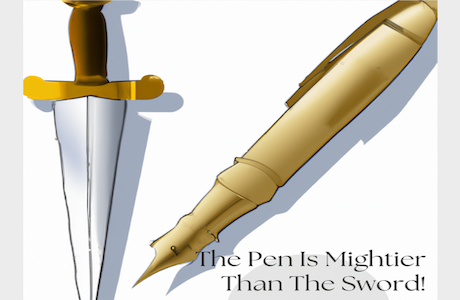
Here's Why The Pen Is Mightier Than The Sword


The saying "the pen is mightier than the sword" has been a popular adage for many centuries. It suggests that words, when put to paper, have a greater ability to influence and change the world than physical force. This is especially true in the modern world, where the written word is more prevalent than ever before. And today it’s no wonder that the news media or the press is considered the fourth branch of the government.


In the past, the sword was seen as the ultimate symbol of power and might. It was a weapon used by warriors and kings to conquer and subdue their enemies. But as time passed, the power of the sword began to wane. With the revolutionary invention of gunpowder and other advanced deadly weaponry, the sword became less effective as a tool of warfare. If we were to find its best use nowadays then it’s no surprise that it might find its place in the kitchen or in the farm's works but no longer on the battlefield.


On the other hand, the pen has only grown in power and influence. With the rise of literacy and the proliferation of books, the written word became a powerful tool for spreading ideas and influencing people. In the modern world, a pen is a tool that anyone can use to make their voices heard and to have a real impact on the world around them.


The written word is a powerful force because it can be used to educate, inform, and persuade. It allows us to record our thoughts, experiences, and knowledge, and to share them with others. It allows us to express our ideas, opinions, and emotions in a way that is clear, concise, and compelling.


The Mighty of the Pen and Online Marketing:


In the context of online marketing, the saying can be related in the following way. Arguably, the pen is mightier than the sword, but in the world of online marketing, the keyboard is the ultimate weapon. With just a few clicks, you can conquer the digital realm and slay your competition and become an industry authority. So don't underestimate the power of a good copywriter – they may not have a physical double-edged sword, but they influence the ultimate weapon of persuasion to the almost 5 billion internet users worldwide. The statistical data about worldwide internet users is published by Statista.


Similarly, one of the greatest strengths of the written word is its ability to withstand the passage of time. Unlike a sword, which can rust and break, words on paper can last for centuries. This means that the ideas and thoughts of past generations can be preserved and passed down to future generations.


In addition, the written word has the ability to cross borders and cultures. It can be translated and shared with people from different parts of the world, allowing for the exchange of ideas and the fostering of understanding and cooperation. This is especially important in today's globalized world, where it is crucial for people from different backgrounds and cultures to be able to communicate and work together.


How the Mighty Pen Helped African Americans to Fight for Civil Rights:


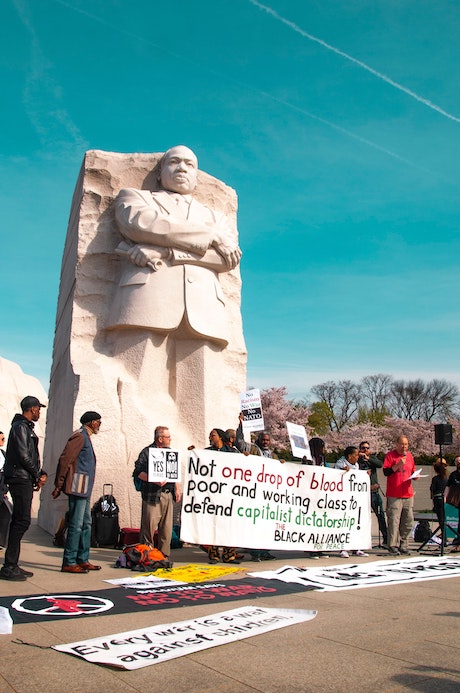
One notable example of the saying "the pen is mightier than the sword" is the role that the pen played in the fight for civil rights in the United States during the 1950s and 1960s. During this time, African Americans and other minority groups used their pens to write letters, essays, and articles about their experiences with racial discrimination, segregation, and other forms of social injustice. These written works, which were often published in newspapers, magazines, and books, helped to raise awareness about these issues and influenced public opinion and policy.


One would remember the Civil Rights Act of 1964, passed into law following years of activism and campaigning by civil rights leaders such as Martin Luther King Jr. and others. This legislation, which prohibited discrimination on the basis of race, color, religion, sex, or national origin, was essentially the result of the efforts of these activists to use their pens to bring about social change.


In this way, the pen was used as a powerful tool to advocate for justice and equality, and it played a crucial role in bringing about significant social and political change. This example illustrates how the power of words and ideas can be more potent and influential than physical force or violence in the pursuit of social justice.


In the Bible Ezra and Nehemia Turned to the Power of the Mighty Pen:


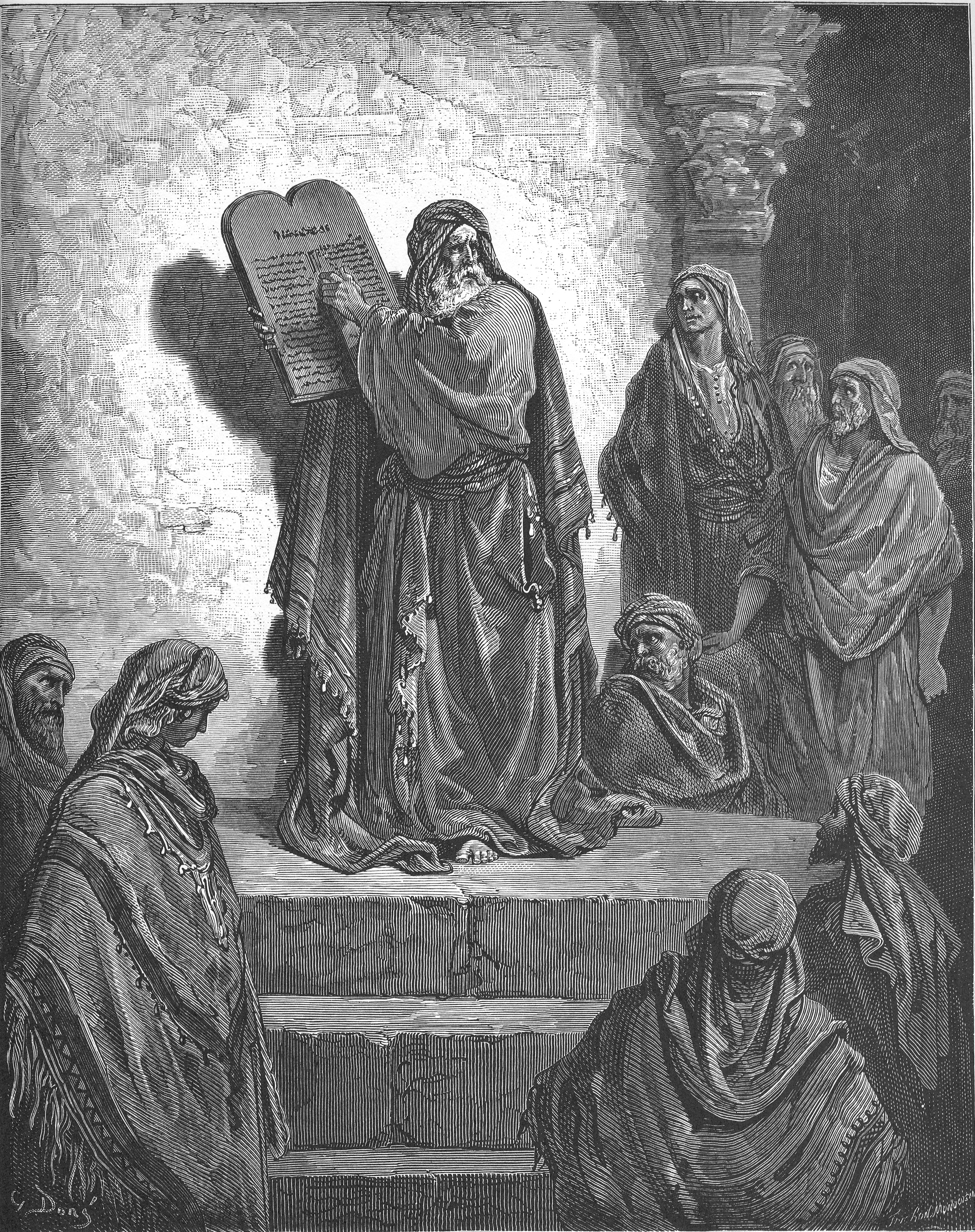
Ezra Reads the Law to the People (Gustave Doré's illustrations for La Grande Bible de Tours, 1866)


In the biblical context, one biblical example that shows the power of the pen is the story of Ezra and Nehemiah in the Old Testament. Ezra was a scribe and a teacher of the Law of Moses, while Nehemiah was a cupbearer to the king of Persia. The entire story could be read in the Bible referring to the books which bear the respective prophets' names i.e. Ezra and Nehemiah.


When the Israelites returned to Jerusalem after being exiled to Babylon, they faced many challenges in rebuilding the city and its walls. Nehemiah, motivated by his love for his people and his faith in God, approached the king and asked for permission to go to Jerusalem and rebuild the walls.


The king granted Nehemiah's request, and Nehemiah set out to Jerusalem with a group of people, including Ezra. Together, they worked tirelessly to rebuild the walls and restore the city.


But they faced opposition from their enemies, who tried to stop them and spread lies about their intentions. In response, Nehemiah and Ezra turned to the power of the pen. They wrote letters to the people, encouraging them to continue working and reminding them of God's faithfulness and protection.


Through their words, they were able to rally the people and keep them focused on their mission. They also wrote down the laws of God and taught them to the people, helping to restore the spiritual foundation of the nation.


In the end, their efforts were successful, and the walls of Jerusalem were rebuilt. This story demonstrates the power of the pen to inspire, encourage, and guide people toward a common goal, even in the face of adversity.


The pen truly is mightier than the sword in this case, as it was through the power of their words that Nehemiah and Ezra overcame the obstacles and achieved their objective. Their writing not only helped to rebuild the physical walls of the city but also played a crucial role in rebuilding the spiritual foundations of the nation.


This story serves as a reminder that the power of words and the written word can be a powerful force for good, and that the pen truly is mightier than the sword.


Wrapping up, the pen is indeed mightier than the sword. While the sword may have been a powerful tool in the past, it has been surpassed by the written word. The written word has the ability to educate, inform, persuade, and withstand the passage of time. It is a powerful tool that anyone can use to make their voices heard and to have a real impact on the world around them and beyond.


Here's the famous Dr. Martin Luther King Jr's penned speech delivered at the steps of Lincoln Memorial in Washington D.C. on Wednesday, August 28, 1963, entitled: I Have a Dream. There were more than 250,000 civil rights supporters who joined the march for jobs and freedom.


Share:

Thursday, February 10, 2022

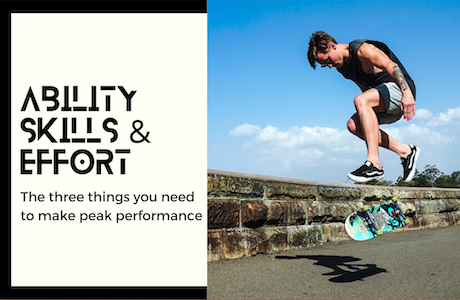
The Three Things you Need to Make Peak Performance


James Arthur Lovell, Jr., one of the first American astronauts to fly and orbit the moon once said, “Be thankful for problems,​​ if they were less difficult, someone with less ability might have your job”. He simply means that sometimes your ability may determine what kind of job you’ll be qualified to do. The more job difficulty is, the rare the ability required to execute it. And this article is going to argue that in order to make peak performance in any job, you need - ability, skills, and effort.

In today’s workplace, the popular career advice is - to follow your passions no matter what. Well, that is OK, but I think we should apply this advice with caution. In my opinion, I think the best advice should be - to follow your talent first then make it your passion. To defend my argument, let’s take, for example, the following scenario. Let us use the same lens to magnify this scenario and look again honestly inside it. Let’s suppose that you are a university professor and you’ve been asked to recommend one candidate among the two to become a practicing medical doctor. Whom one would you recommend from the following two candidates’ profiles? 


The first candidate has a deep passion for piano music but also he or she is intelligent and has demonstrated to possess a very high IQ. He or she is also talented in problem-solving ability.


The second candidate has a deep passion for neurosurgery but, unfortunately, he or she is a little bit mediocre and has shown to possess a below-average IQ. He or she has also shown to be a talented comedian. 


The question is: who among those two candidates would you endorse to follow his or her passion? Would you really recommend the second candidate to practice brain surgery simply because he or she is passionate about it? It’s my hope that you’ll agree with me that following your talent over your passion is the best advice.


Perhaps - you might argue that - becoming a qualified neurosurgeon is not a matter of choosing people randomly but it involves long training and graduating with passing marks. Yes, but here we assume a really mediocre candidate who has no ability to score above the passing mark but inside him/her has a deep-seated passion for neurosurgeon practice.


There are others who are lucky and multi-talented people. I would say for those people, they can choose to follow their passion among their talents. They're already multi-talented so they can choose which talent they're passionate about. Following their passion among their talents make sense to them.


In my personal research, I concluded that in order to make peak performance at work, you basically need only three things: ability, skills, and effort. And those three things need to be executed in the following sequence: first, assess your ability, second get the required skills, and third, attempt to succeed by applying all your efforts. 


In the simplest words, we could define the ability as the power to do something. We define skill as the ability to use your ability to do something competently. While an effort is a serious attempt to do something.


 If your personal aim is to pursue excellence and perform wonders at work, then the first thing you need to do is to assess your ability.


"In the simplest words, we could define ability as the power to do something. We define skill as the ability to use your ability to do something competently, while an effort is a serious attempt to do something."


 Assessing Your Ability:


Generally speaking, assessing your ability depends on your in-born qualities and what kind of job are you doing? But one way to assess your ability is to seek the advice of career advisors. You can also find a way to do a personal SWOT analysis. Check for both your strength and opportunities against the threats and weaknesses to avoid bias and also get the full picture. If you are smart and you do it honestly, you can be confident to apply that evaluation of yourself to capitalize on your outstanding abilities. Because you can see in your heart, then the truth is that the heart reflects the actual personality (Proverb 27:19).


Others could get insight on this by simply listing those abilities they think they possess based on their real-life experience. And in the case of Christian believers, they need not be afraid because they have a choice to seek Divine Guidance. Christianity teaches that the Holy Spirit gifts each person for the greater benefit of the entire church (1Corinthiants 12:4-11). It is your duty to discover or pray for your gifts. To some extent, life may be similar to forced military duty with a scenario of - do or die. This is because, in the grandstand of things, things are already at stake.


It is very important to do a kind of job which you know for sure that you have got the necessary abilities to do that job very well.  Contrary to that, things might be like how the following illustration is going to explain. For the sake of this illustration, let's take the example of a blind person. We both know, to drive a car safely in the city, you must have the ability to see through the windshield while you’re driving on the road unless it's a self-driving car. Now, what do you think will happen if that blind person is allowed to drive a manual car at high speed? Obviously, a collision is imminent. The danger here is that a blind person does not have the ability to see and is therefore disqualified to drive on his/her own on the roads.


Believe it or not, most people who have ignored the process of assessing their abilities first are doing exactly the same as that blind person above. And they are doing it by driving at a top speed through their daily struggle, as evidenced by talent misappropriation and poor work performance. In other words, their peak performance is below the general average performance.  


There is an ongoing debate of whether talented people are born or are made. Today let's spare that discussion for another day but let it be enough to say that it is possible to fill the gap in your ability’s shortcoming. One way to overcome that is to acquire the required skills by doing what it takes.


 Working on Your Skills:


The good news about skills is that it is acquired through a certain process. You can gain a new skill or develop or polish a current one through training, tutorials, or on-the-job practice in real life.


Similarly, to make general peak performance at your work, do not underestimate the importance of learning the required identified job skills.


The following story illustrates the point on how skills help to get things done more efficiently. 


One day in a certain company, a piece of certain factory machinery went down and caused a machinery malfunction. The factory manager quickly called an engineer who was skilled in fixing factory machines with malfunction like that. On arriving at the site, the engineer started by asking probing questions so that he could understand the nature of the problem that led to the breakdown. After that, he inspected the factory machinery. Then he went on to change just one piece of nut situated in the middle of the factory machinery plant. Wow, when the factory machine was switched on, the factory machine started to work again and was up and running,


Subsequently, the engineer billed the factory manager with a $1000 invoice. The factory manager protested claiming that he could get that one nut from the nearest hardware store for less than $10 then why the bill is so ridiculously high?  The engineer smiled on his face and together with a cool composure replied, “The itemized breakdown of that invoice is: $10 is for the nut and $990 is for the labor charge required to know which nut to replace and deal with!”.


To have the ability and the skills is half the story, you need to make efforts in order to make peak performance at your work.


Making Effort to Make General Peak Performance at Work:


You have the abilities and you have the required skills then you should add your personal effort to succeed. The memorable quote of social commentator, William Penn Adair Rogers reminds us that “Even if you are on the right track, you'll get run over if you just sit there”.


Once you have identified your abilities and you have learned the required skills then you must make a serious personal effort to make peak performance and succeed at your work. No more, no less - just that.


Conversely, there are many people who make mistakes of thinking that effort itself can accomplish almost anything. They say that all you ever need to succeed and make peak performance is to work very, very hard.


My research findings have revealed that applying effort alone is not enough without having the other two things in place: ability and skills.


To make this argument clear, let's take a look at the following scenario. Suppose you do not have the abilities and the skills to fly or land an airplane. Suppose again that you happen to be a passenger in one of the flying airplanes. Assume that while you were 35,000 feet above sea level suddenly all your pilots collapsed and they have asked you to assist to land the airplane safely on the ground. Within those few minutes before the airplane explodes, how much effort do you think will be enough to make you land the airplane safely like a qualified commando pilot?


It’s from this point of view that I insist you need to assess your abilities first, get the skills and finally add personal effort to do the extraordinary by making a peak performance. 


Making a truly serious effort is going the extra mile. (Matthew 5:41).


Most self-help publications’ ideas revolve around the core issue of putting into flame your inner abilities to exert unwavering efforts. But in a nutshell, the secret is to make you, give it your ‘all’. Fight to win. Work to excel. And be wise.


In colleges and in classrooms, we learned the perfect education models, and sometimes some other varying factors were held constant for the sake of proving a working theory or model. But the fact of the matter is - in real life all factors vary, and vary at varying rates. The hell is broken loose all the time. So, to navigate successfully and make the general peak performance at your work, you need three things - ability, skills, and a lot of effort.


Here's a talk presented by Angela Duckworth at Lavin Agency Speakers Bureau, claiming that: effort matters more than talents.


Share:

Friday, December 31, 2021

The Hard-To-Deny Facts On 'You Reap What You Sow':


The Hard-To-Deny Facts On "You Reap What You Sow"


If there's one piece of ancient wisdom that has survived empires, religions, philosophies, and the entire internet comment section, it's this: you reap what you sow. It's been said in a thousand different ways, across a thousand different cultures, and yet somehow, every single generation has to learn it the hard way. You'd think we'd get the memo by now. But here we are, still planting gossip seeds and wondering why drama keeps blooming in our gardens.

Let's dig into this — pun absolutely intended — and break down why this timeless principle isn't just some old farmer's proverb. It's a hard-coded rule of the universe, and it applies to every single area of your life.


What Does "You Reap What You Sow" Actually Mean?

Before we go any deeper, let's make sure we're all on the same page. "You reap what you sow" is a principle rooted in agriculture — the idea that whatever seed you plant in the ground is exactly what's going to grow. Plant corn, get corn. Plant weeds, get weeds. Plant nothing, get a whole lot of dirt and disappointment.

Metaphorically, it means that your actions — your choices, your habits, your words, your intentions — all come back to you in kind. Do good things, good things come back. Do rotten things, and well... don't act surprised when your life starts smelling a little rotten.

The phrase itself comes from the Bible, specifically Galatians 6:7 — "Do not be deceived: God cannot be mocked. A man reaps what he sows."(NIV). But don't let the religious origin fool you into thinking this is just a Sunday sermon concept. This principle shows up in Hinduism as karma, in Buddhism as the law of cause and effect, in Taoism as the natural order, and even in modern science as Newton's Third Law. Every action has an equal and opposite reaction, baby.

The universe, it turns out, is running a very tight accounting system.


The Science Behind Why This Principle Is Basically Unavoidable

Here's the thing about "you reap what you sow" — it's not just poetic wisdom. It's backed by psychology, neuroscience, and behavioral science in ways that make it nearly impossible to argue against (though plenty of people still try, usually while wondering why their lives aren't working out).

Neuroplasticity tells us that the brain physically rewires itself based on repeated behaviors and thoughts. Every time you act generously, your brain builds stronger pathways toward generous behavior. Every time you choose cynicism or cruelty, those neural pathways get reinforced, too. In other words, you're literally planting seeds in your own brain every single day, and the harvest is your personality, your worldview, and eventually your destiny.

Then there's behavioral reinforcement. Psychologists have known for decades that behaviors that are rewarded get repeated, and those that are punished tend to diminish. But here's the sneaky part — a lot of the "rewards" and "punishments" we receive in life come not from external sources, but from the natural consequences of our own choices. Be unreliable, and people stop trusting you. That's not punishment from the universe — that's just cause and effect wearing a name tag.

Social reciprocity is another scientifically-documented phenomenon that proves this principle. Humans are hardwired to reciprocate. If you're kind to someone, they're statistically more likely to be kind to you and to others. If you treat people badly, they either withdraw or retaliate. Robert Cialdini's research on the principle of reciprocity showed that this isn't just a "nice idea" — it's a deeply ingrained human behavioral pattern. You sow a smile; you often reap a smile. You sow hostility; you reap a social cold shoulder that could frost a winter morning.


You Reap What You Sow in Relationships: The Garden Nobody Wants to Weed

Let's talk about relationships, because this is where most people love to complain about unfair harvests while completely ignoring what they've been planting.

Ever had a friend who was always flaking on plans, never really listening, and generally showing up only when they needed something — and then had the audacity to wonder why their friendships felt shallow? Yeah. That's a sowing problem, not a reaping problem.

Relationships are gardens, and you get out what you put in. If you invest time, attention, empathy, and genuine care into the people in your life, you tend to build connections that are deep, resilient, and genuinely fulfilling. If you treat relationships as transactional — giving only when there's something in it for you — don't be surprised when people start treating you the same way.

This applies to romantic relationships, too. Partners who consistently sow appreciation, honesty, and effort into their relationships tend to build partnerships that can weather real storms. Those who sow neglect, dishonesty, or indifference — well, they often find themselves either in relationships full of resentment or in no relationship at all, wondering what went wrong. What went wrong was the planting, friend.

And here's the tricky part — you might not see the harvest immediately. Relationships are long-game gardens. Sometimes the seeds of kindness you planted years ago bloom at exactly the moment you need them most. And sometimes the damage from consistently bad behavior takes time to fully surface before everything collapses at once. Either way, the accounting always catches up.


Career and Success: Sowing the Seeds of Professional Greatness (Or Mediocrity)

In the professional world, "you reap what you sow" is basically the unspoken law that separates the people who seem to "get lucky" from those who don't. Spoiler alert: it's rarely actually luck.

The people who consistently put in effort, invest in their skills, show up with integrity, treat colleagues with respect, and go the extra mile tend to build careers that compound over time. They build reputations. They build networks. They build opportunities. Meanwhile, those who cut corners, take credit for other people's work, or bring a toxic attitude to the office tend to find those same behaviors circling back around to bite them — usually at the worst possible moment.

Hard work is a seed with a remarkable germination rate. You might not see the results tomorrow, or even next month. But consistent effort planted over years creates a harvest that can look like "overnight success" to everyone watching from the outside.

Consider the entrepreneurs who spent years building skills, absorbing failure after failure, and refining their ideas — only to "suddenly" break through and become wildly successful. From the outside, it looks like luck. From the inside, it's the harvest of a thousand seeds planted during seasons nobody else was watching.

Your professional reputation is also a direct harvest of your daily behavior. Are you someone who delivers on promises? Do you communicate clearly and honestly? Do you support your team or undermine them? Every one of these behaviors is a seed, and your reputation — which opens or closes professional doors — is the crop.


The Law of Sowing and Reaping in Financial Life

Money, glorious money. This is where the principle gets almost embarrassingly literal.

Financial health is one of the clearest examples of reaping what you sow. The person who saves consistently, invests wisely, and avoids the siren call of lifestyle inflation is planting financial seeds every single month. Compound interest — often called the eighth wonder of the world — is just the mathematical version of this principle. Small seeds, planted regularly, grow into enormous trees over time.

On the flip side, the person who lives beyond their means, treats credit like free money, and makes impulsive financial decisions is planting debt seeds. And debt, like weeds, grows aggressively if you don't deal with it.

Generosity is also a financial seed that often gets overlooked. There's a growing body of research suggesting that generous people tend to build stronger social networks, attract more collaborative opportunities, and experience greater career success over time — all of which can translate into financial abundance. This doesn't mean you should give money you don't have, but it does suggest that financial stinginess and a hoarding mentality can actually limit your own growth.

Warren Buffett, one of the most successful investors in history, has talked extensively about the long-term compounding effect of both money and reputation. His approach to business has always been rooted in integrity and long-term thinking — a classic sowing- and-reaping strategy.


Mental and Physical Health: Your Body Keeps the Score of Every Seed

Your health — both mental and physical — is perhaps the most intimate garden you'll ever tend.

The lifestyle choices you make daily are seeds. What you eat, how much you move, how you manage stress, and how much sleep you get — these aren't just random wellness tips. They're the raw material of your future health. Plant years of poor nutrition and sedentary living, and the body eventually presents the bill. Plant consistent movement, balanced eating, and decent sleep hygiene, and the body rewards you with energy, resilience, and longevity.

Mental health works the same way. The thoughts you habitually entertain become the soil of your mind. Consistently feed your brain with gratitude, curiosity, and self-compassion, and you'll find it becomes easier to navigate difficulty. Consistently water it with self-criticism, catastrophic thinking, and resentment, and you'll find those thought patterns grow into serious psychological weeds that are much harder to clear.

Mindfulness practices, journaling, therapy, and regular social connection — these are mental health seeds. They don't fix everything overnight, but planted consistently, they build a mind that's more stable, more resilient, and more capable of joy. Remember: the healthy brain lives in the healthy body.


Sowing Kindness in a World That Sometimes Makes It Hard

Here's where it gets real. Sowing kindness isn't always easy, and it definitely isn't always immediately rewarded.

Sometimes you're generous, and people take advantage. Sometimes you work incredibly hard and don't get the recognition you deserve. Sometimes you're a phenomenal friend and still get let down. Does that mean the principle is broken?

Not quite. What it means is that the harvest isn't always immediate, and it doesn't always come from the exact field where you planted. You might sow kindness toward someone who never reciprocates — but that same act of kindness shifts something in you, builds your character, and ends up being witnessed or felt by someone else entirely. The universe's accounting system is thorough, but it doesn't always deliver results via the most obvious route.

There's also the matter of what you sow inside yourself. Every act of kindness, every moment of integrity when nobody's watching, every instance of choosing compassion over cruelty — these plant seeds in your own character. And your character, over a lifetime, is the most consequential harvest of all.

Kindness also has a documented ripple effect. Studies on what researchers call "moral elevation" — the warm, inspired feeling you get when you witness someone doing something genuinely good — show that witnessing acts of kindness actually motivates observers to be kinder themselves. So when you sow kindness, you're not just planting a seed for your own harvest; you're potentially starting a garden that spreads well beyond your own life.


Common Excuses People Make for Avoiding the Sowing Work

Let's address the elephant in the room — or more accurately, the person standing in the middle of a barren field complaining that nothing's growing.

"I don't have time." Classic. Everyone has the same 24 hours. What differs is what people choose to plant in them. The person who says they don't have time to maintain their health, invest in their relationships, or develop their skills is essentially saying they don't have time to tend their garden. The weeds, unfortunately, don't care about your schedule.

"I've been trying, and nothing's working." Sometimes the issue isn't effort — it's the type of seed. You can work incredibly hard at the wrong things and wonder why the harvest doesn't match your expectations. Effort matters, but direction matters just as much. Plant effort in the right soil — the right relationships, the right skills, the right habits — and results follow.

"Other people don't have to work this hard." Maybe. But you don't actually know what seeds other people have planted in the past, or what they're doing behind closed doors. Comparing your planting season to someone else's harvest season is a recipe for bitterness.

"I'll start later." The best time to plant a tree, as the saying goes, was twenty years ago. The second-best time is now. Every day of delayed sowing is just a longer wait for the harvest.


How to Start Sowing Better Seeds Today

Alright, so you're convinced. You want a better harvest. Here's how to actually start planting with intention:

Start small, but start now. You don't need a dramatic life overhaul to begin sowing better seeds. One genuine conversation. One hour of focused work. One healthy meal. One act of unexpected kindness. These are seeds, and they compound.

Be intentional about what you're planting. Before you speak, ask yourself: is this the kind of word I want growing in my relationships? Before you act, ask: is this the kind of behavior I want defining my character? Before you spend, ask: is this aligned with the financial harvest I'm trying to grow? In a nutshell - practice the golden rule: "Do to others what you want them to do to you!"

Play the long game. The biggest mistake most people make is expecting an immediate harvest from freshly planted seeds. Gardens don't work that way, and neither does life. Trust the process, maintain your field, and let time do what time does.

Prune the weed regularly. Part of sowing well is removing what doesn't belong — toxic habits, draining relationships, limiting beliefs, and self-destructive patterns. Weeds steal nutrients from your good seeds. Be ruthless about clearing them.


Conclusion: The Garden of Your Life Is Entirely Yours to Tend

Here's the bottom line: "You reap what you sow" isn't a threat. It's not a cosmic punishment system designed to make your life difficult. It's actually one of the most empowering truths in existence, because it means that you have far more influence over your life's harvest than you might think.

Every single day, you're a farmer making choices about what to plant. In your relationships, your career, your health, your mind, your community — you're sowing seeds constantly, whether you're doing it consciously or not. The question isn't whether you're planting. The question is whether you're planting with intention.

The person who understands this principle and lives by it doesn't just drift through life hoping for a good harvest. They tend their garden. They remove the weeds. They water what matters. They're patient through the growing seasons and grateful during the harvest.

And here's the beautiful, hard-to-deny truth at the end of it all: no one else can tend your garden for you. Other people can help. Circumstances can make things easier or harder. But the seeds — the daily choices, the habits, the intentions, the effort — those are yours. Every single one of them.

So go plant something worth harvesting.

Share:

Tuesday, June 1, 2021

The Go-getter On Wherever There's A Will, There's A Way


The Go-getter On Wherever There's A Will, There's A Way

Where there is a will, there is a way. (Veronica, CC BY-SA 4.0, via Wikimedia Commons)


"Wherever there is a will, there is a way" is a saying that has been passed down through the ages, inspiring countless individuals to push through difficult times and achieve their goals. But what exactly is this go-getting attitude that is being referred to, and how can we harness it to achieve our own goals?

First, let's break down the saying. "Will" refers to the determination and drive to achieve something. It's that burning desire in the pit of your stomach that tells you to keep going, even when the going gets tough. And "way" refers to the specific path or method that will lead to the achievement of your goal.

Now, here's the magic part: when you have a strong will, a way will always present itself. This is because when you have a strong desire to achieve something, your mind becomes more open to finding solutions and opportunities. You become more resourceful and creative, and you start seeing possibilities that you may have previously overlooked.


Einstein's Advice to the Japanese Hotel Bellboy


In 1922, Albert Einstein, the renowned physicist and mathematician, wrote a note to a bellboy at a hotel in Japan. The note, which was written in German, read "A quiet and modest life brings more joy than a pursuit of success bound with constant unrest." The note was recently sold at an auction for 1.6 million dollars. However, it is not just this note that holds valuable advice, but also a second sheet of paper that Einstein wrote on, which read "Where there is a will, there is a way."

This phrase, "Where there is a will, there is a way," is a reminder that with determination and drive, we can achieve anything we set our minds to. It's a reminder that the path to success is always there, waiting for us to find it. Einstein is reminding us that if we have a strong desire to achieve something, our mind becomes more open to finding solutions and opportunities. As said before, we become more resourceful and creative, and we start seeing possibilities that we may have previously overlooked.

But what if you don't have a strong will? Don't worry, it's not a lost cause. You can build up your will like a muscle. Just like going to the gym and lifting weights will make your muscles stronger, setting small, achievable goals and consistently working towards them will make your willpower stronger. Before you know it, you'll be ready to take on bigger and bigger challenges.

Now, let's add some humor to the mix. Imagine you're trying to open a jar of pickles, and you can't seem to get the lid off. You could give up and go without pickles, or you could channel your inner Giant and use all your might to twist that lid off. But let's be real, the jar probably wins. But if you have the will, you'll find a way. You could use a rubber band, a spoon, or even a hammer to open the jar. Now you're eating pickles like a boss.

Henceforth, Einstein's words of wisdom are not just limited to scientific equations, but also extend to practical advice for life. It's advised to heed Einstein's advice and remember, "Wherever there is a will, there is a way." And also don't forget to use a rubber band to open the jar of pickles, if all else fails.


The Blind and Deaf Helen Keller Gets a College Degree:


In the bustling city of New York, there lived a young woman named Helen Keller. Helen was born with the ability to see and hear, but at the age of 19 months, she fell ill and lost both her sight and hearing. Growing up, Helen struggled to communicate and understand the world around her. But she had a will, a burning desire to learn and live a fulfilling life.

Helen's parents were determined to help her, and they found a teacher, Anne Sullivan, who was able to teach Helen how to communicate through touch and sign language. Helen worked tirelessly with Anne, and through sheer determination and will, she was able to learn how to read and write.

As Helen grew older, she set her sights on higher education. She was determined to attend college, just like her sighted and hearing peers. But this was no easy feat. Helen had to work harder than anyone else, as she had to read and write using Braille and communicate with her teachers and classmates through sign language. But Helen was up for the challenge.

With the help of Anne, and her own strong will, Helen was able to attend Radcliffe College and graduated with honors. Helen Keller's story is a testament to the power of determination and the belief that if you have a will, a way will always present itself. Despite her disabilities, Helen was able to achieve the impossible and become an advocate for the blind and deaf community, proving that a strong will can conquer any obstacle.

Helen Keller's story is an inspiration to us all. She taught us that no matter what challenges we may face in life, with a strong will and determination, we can achieve anything we set our minds to. So, my dear readers, let this story be a reminder to you that when life seems tough, when the path seems uncertain, if you have a will, you will definitely find a way.


Thomas Edison and the Invention of a Light Bulb:


In the bustling city of Menlo Park, New Jersey, there lived an American inventor named Thomas Alva Edison. Edison had a dream, a dream to create a light bulb that would change the world. He had a will, a burning desire to make his dream a reality.

Edison set out to make his dream a reality. He began experimenting with different materials for the filament, trying everything from bamboo to cotton. He faced countless setbacks and failures, but he never let them defeat him. He was determined to find a way to make the light bulb work.

For months, Edison and his team worked tirelessly, testing thousands of different materials and going through over 6,000 prototypes. Each time they faced a failure, they would analyze what went wrong and try again. Edison was not discouraged by the numerous obstacles; he had a will, a will to make the light bulb work, and he knew that a way would present itself.

Finally, after months of hard work, Edison and his team found the perfect material, a carbonized bamboo filament that could burn for over 1,200 hours. And with that, the first practical incandescent light bulb was born.

The invention of the light bulb changed the world; it brought light to the darkness, and it revolutionized the way we live. Thomas Alva Edison's story is a testament to the power of determination and the belief that if you have a will, a way will always present itself. He faced countless obstacles, but he never gave up; he had a will, a will to make the light bulb work, and he succeeded.

Dear readers, let this story be a reminder to you that when life seems tough, when the path seems uncertain, if you have a will, you will find a way. Thomas Alva Edison's story teaches us that even in the face of failure, if you have a strong will and determination, you can achieve the impossible.


John F. Kennedy and the Seemingly Impossible Journey to the Moon

On May 25, 1961, President John F. Kennedy announced to a joint session of Congress his goal of landing a man on the moon and returning him safely to Earth before the end of the decade. This goal, known as the Apollo 11 Mission, was considered by many to be impossible, but Kennedy had a will, a will to make it happen. He knew that if the United States had a will, they would find a way to make it happen.

The Apollo 11 mission was a massive undertaking, requiring the collaboration of thousands of scientists, engineers, and technicians. It required the development of new technologies, such as the Saturn V rocket, which was the most powerful rocket ever built at that time. The Apollo program also required the development of new materials and new methods of manufacturing, as well as new training programs for the astronauts.

The Apollo 11 mission was not without its challenges. The launch was delayed several times due to technical problems and weather conditions. The astronauts also faced numerous obstacles during their journey to the moon, including a malfunctioning guidance computer and a dangerous landing site. But despite these challenges, the team behind the Apollo 11 mission never gave up. They had a will, a will to make the mission succeed.

On July 20, 1969, Neil Armstrong became the first human to set foot on the surface of the moon, with the famous words "That's one small step for man, one giant leap for mankind". The success of the Apollo 11 mission was a testament to the power of determination and the belief that if you have a will, a way will always present itself. The United States had a will, a will to land a man on the moon and return him safely to Earth, and they succeeded.

To taste the feel of this endeavor, go out at night, raise up your head, and have a look at the moon. Then, while still looking at the moon, let this thought and imagination run through your mind: “Back in the days, a certain human being was there!” I hope you’ll appreciate that it was not a small feat, and it truly needed a very strong will for the way to the moon to present itself.

The Apollo 11 mission was not just a technological achievement; it was also a demonstration of the power of the human spirit. It showed that when faced with seemingly impossible challenges, if we have the will, we can find a way to overcome them. The mission was a reminder that with hard work, determination, and a shared goal, we can achieve anything we set our minds to.

In conclusion, the Apollo 11 mission was a shining example of the saying "Wherever there's a will, there's a way." The United States had a will, a will to accomplish the impossible, and they succeeded. The Apollo 11 mission serves as an inspiration to us all, showing us that with determination and a strong will, we can achieve anything we set our minds to. And we can do it on time!
Share:

About Me

My photo
About Text Wisdom: Text Wisdom brings iconic phrases—“Less is more,” “Wisdom is better than strength,” “The pen is mightier than the sword”—to life through entertaining, objective explorations that uncover their hidden power. Mission: We believe wisdom is the ultimate catalyst for success. By tracing the origins and unpacking the lessons behind those timeless sayings, we empower you to think clearly, act purposefully, and live fully. What We Offer: ✅ Faithful research and objective analysis ✅ Engaging storytelling with memorable backstories ✅ Step-by-step methods to cultivate personal wisdom ✅ Actionable tips to apply insight in everyday life. Meet the Author: LM Edward, a university graduate, who has crafted a universal, step-by-step framework for wisdom drawn from literature, history, science, and philosophy. Join our community of curious learners and transform your life—because wisdom, once gained, is more precious than gold!

Money Smart: The Ultimate Financial Freedom Blueprint [Available at Amazon; Grab your Copy Today!]

Money Smart: The Ultimate Financial Freedom Blueprint [Available at Amazon; Grab your Copy Today!]
Are you tired of living paycheck to paycheck? Do you dream of a life where money is no longer a source of stress, but a tool to create the freedom you deserve? Money Smart: The Ultimate Financial Freedom Blueprint is your step-by-step guide to breaking free from financial constraints and building a life of abundance, security, and independence! Hurry up! Get your copy today, and say goodbye to poverty!

Support for Our Mission and Efforts

cards
Powered by paypal

Subscribe for All the Important Updates

Featured Post

When Life Hands You A Lemon, Squeeze It And ....

  When Life Hands You A Lemon, Squeeze It And Make Lemonade: The Ultimate Guide To Turning Sour Moments Sweet Let's be honest for a sec...

Categories

Recent Posts

Our Slogan

"It is through speech that wisdom is recognised ..." (Sirach 4:24, NCB)

Privacy Policy

Contact Support

Please send us an email to admin@textwisdom.com for any issue related to this blog.